Picture this: it’s 2 AM, and your adorable new puppy is howling in their crate like they’re auditioning for a rock band. You’re bleary-eyed, googling how to crate train a puppy at night and wondering if you’ll ever sleep again. Don’t worry—you’re not alone. Nighttime crate training can be challenging, but it’s one of the best gifts you can give your dog and yourself.
Table of Contents
- Why Crate Train a Puppy at Night?
- Best Crate Setup for Nighttime Training
- First Night Home With Your Puppy
- How to Stop Puppy Whining in Crate at Night
- Crate Training Schedule at Night
- Common Mistakes to Avoid During Crate Training
- FAQ – How to Crate Train a Puppy at Night
Why Crate Train a Puppy at Night?
Crate training isn’t cruel—it’s a safe way to help puppies learn bladder control, avoid destructive chewing, and settle into a bedtime routine. A properly crate-trained puppy sees the crate as a cozy den, not a prison. This is especially helpful for breeds prone to anxiety, like those in our natural remedies for dog anxiety guide. For additional expert tips, check out AKC’s guide on crate training.
One of the most frequent searches by new owners is puppy crying in crate at night. With the right approach, you can avoid sleepless nights and help your puppy feel secure.
Best Crate Setup for Nighttime Training
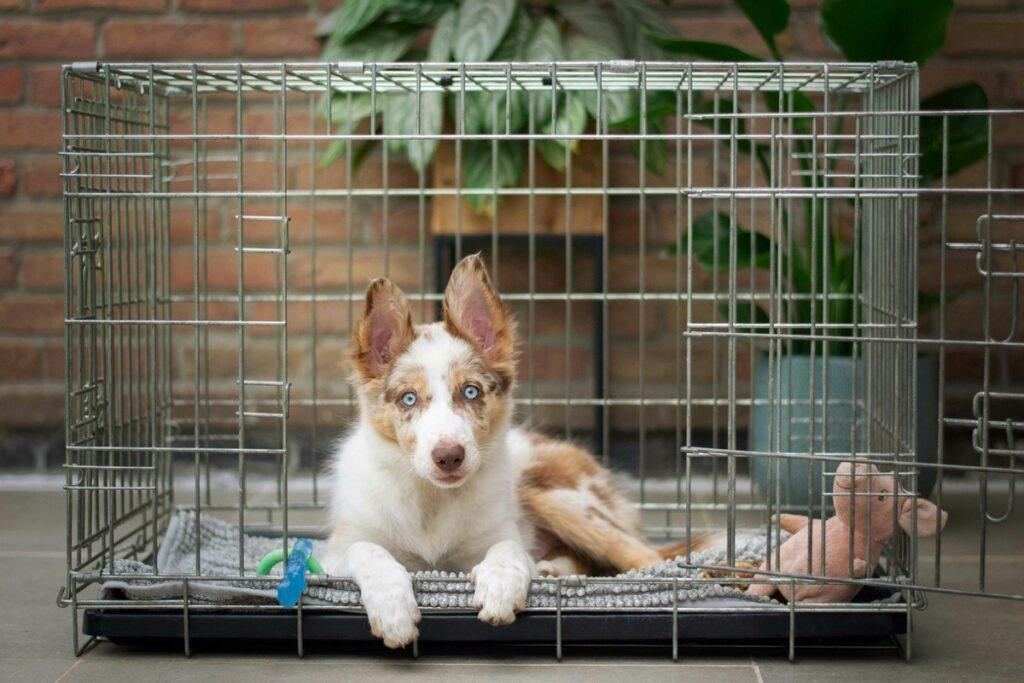
Setting up your puppy’s crate correctly can make a huge difference in how smoothly your nights go. Here’s what your best crate setup for puppy at night should include:
- Comfortable bedding (but not so plush they chew it apart).
- A safe chew toy or soft toy for comfort.
- Crate positioned near your bed for reassurance during the first nights.
- Water only if your vet recommends overnight access.
- A crate cover or blanket over part of the crate to create a den-like feel.
Check out our guide to the best dog beds for ideas on safe, washable crate liners.
First Night Home With Your Puppy
The first night is often the toughest. Your puppy has left their littermates, is in a strange place, and may cry when alone. For crate training puppy first night home tips:
- Keep the crate close to your bed so your puppy can smell and hear you.
- Stick to a calm bedtime routine—avoid exciting play right before bed.
- Offer a potty break right before crating for the night.
- Expect your puppy to wake up for bathroom trips.
Patience during this time pays off tremendously for long-term success. Puppies learn quickly when they feel secure.

How to Stop Puppy Whining in Crate at Night
It’s normal for puppies to protest in the crate initially. However, how to stop puppy whining in crate at night is one of the most searched phrases for a reason—it’s exhausting!
- Don’t rush to your puppy every time they cry. Wait a moment to see if they settle.
- Take them out only if it’s genuinely a potty need.
- Ignore attention-seeking whines after confirming they’re safe and comfortable.
- Use white noise to help soothe anxious puppies.
- Stay calm and consistent—your puppy will feed off your energy.
For tips on dealing with specific night-time issues, read our guide on how to stop dog whining at night.
Crate Training Schedule at Night
Establishing a crate training schedule for puppy at night sets expectations for both you and your pup. A typical night might look like this:
- 9:30 PM – Calm playtime and potty break.
- 10 PM – Quiet time in crate near your bed.
- 1 AM – Wake up for potty break.
- 4 AM – Another potty break, depending on your puppy’s age.
- 6-7 AM – Morning wake-up and breakfast.
Young puppies cannot hold their bladder all night. As they grow, nighttime potty trips gradually disappear.
Common Mistakes to Avoid During Crate Training
- Using the crate as punishment.
- Leaving the puppy in the crate too long.
- Giving in to every whimper, reinforcing crying behavior.
- Skipping crate training altogether due to guilt.
Pro Tip: Short training sessions multiple times daily help puppies learn faster than one long session. For more methods, check out our clicker training guide.
FAQ – How to Crate Train a Puppy at Night
Should I let my puppy cry it out in the crate?
It depends. Some crying is normal, but don’t ignore persistent distress. Rule out potty needs first, then ignore minor whining to avoid reinforcing it.
How long can a puppy stay in the crate overnight?
Young puppies may only last 2-4 hours without a potty break. Older puppies can stretch to 6-7 hours.
Where should I put my puppy’s crate at night?
Near your bed is ideal at first for reassurance. Later, you can gradually move it if desired.
Why does my puppy cry in the crate at night?
They may feel lonely, scared, or need a bathroom break. Crate training helps them learn the routine and feel secure.
How long does nighttime crate training take?
Many puppies adjust in 1-3 weeks if training is consistent and gentle.
Have your own crate training tricks? Share them below and help other puppy parents sleep better!
Looking for more puppy training tips? Explore our guides on how to potty train a puppy fast and how to socialize a puppy for a well-rounded start!